
Concrete repair is the stage that defines whether anchor removal has been completed to a professional standard. Learn about the materials and methods that matter.
Concrete repair is the stage that defines whether anchor removal has been completed to a professional standard. Once anchors are removed, the slab is left with voids that must be properly reinstated.
Why Repairs Cannot Be Treated as Minor Work
Anchor holes are not superficial defects - they exist within load-bearing areas of the slab. If left untreated or poorly repaired, they can result in:
- Surface inconsistency affecting forklift operations
- Structural weakness under load
- Long-term deterioration of the concrete slab
In warehouse environments, these areas are exposed to constant traffic and impact, making repair quality paramount.
Epoxy as a Structural Repair Material
Epoxy is used because it performs as part of the slab, not as a temporary filler. Its advantages include:
- Strong adhesion to existing concrete
- High compressive strength exceeding the slab itself
- Resistance to shrinkage and cracking
This ensures the repair holds under industrial conditions and matches the slab's performance.
The Importance of Finish Quality
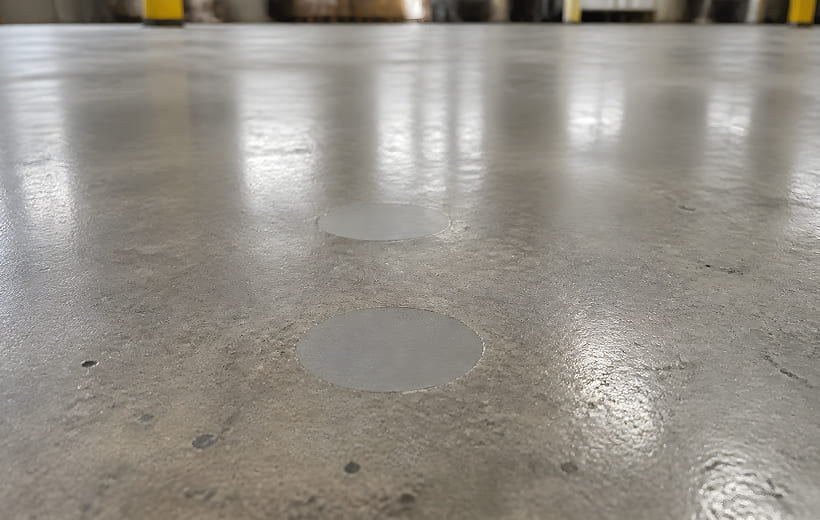
The repair must be flush with the surrounding slab, consistent across the surface, and free of voids or depressions. This determines whether the slab is suitable for handover and ongoing use.
1. Anchor Removal
Full extraction defines the void to be filled, ensuring no metal residue remains.
2. Structural Repair
Filling the void with industrial-grade resin to reinstate the slab's structural integrity.
3. Surface Grinding
Ensuring the finish is perfectly level and consistent with the surrounding floor.
Final Consideration
Concrete repair is not complete when the hole is filled - it is complete when the slab is restored. A consistent, level surface is the benchmark for a properly finished floor.